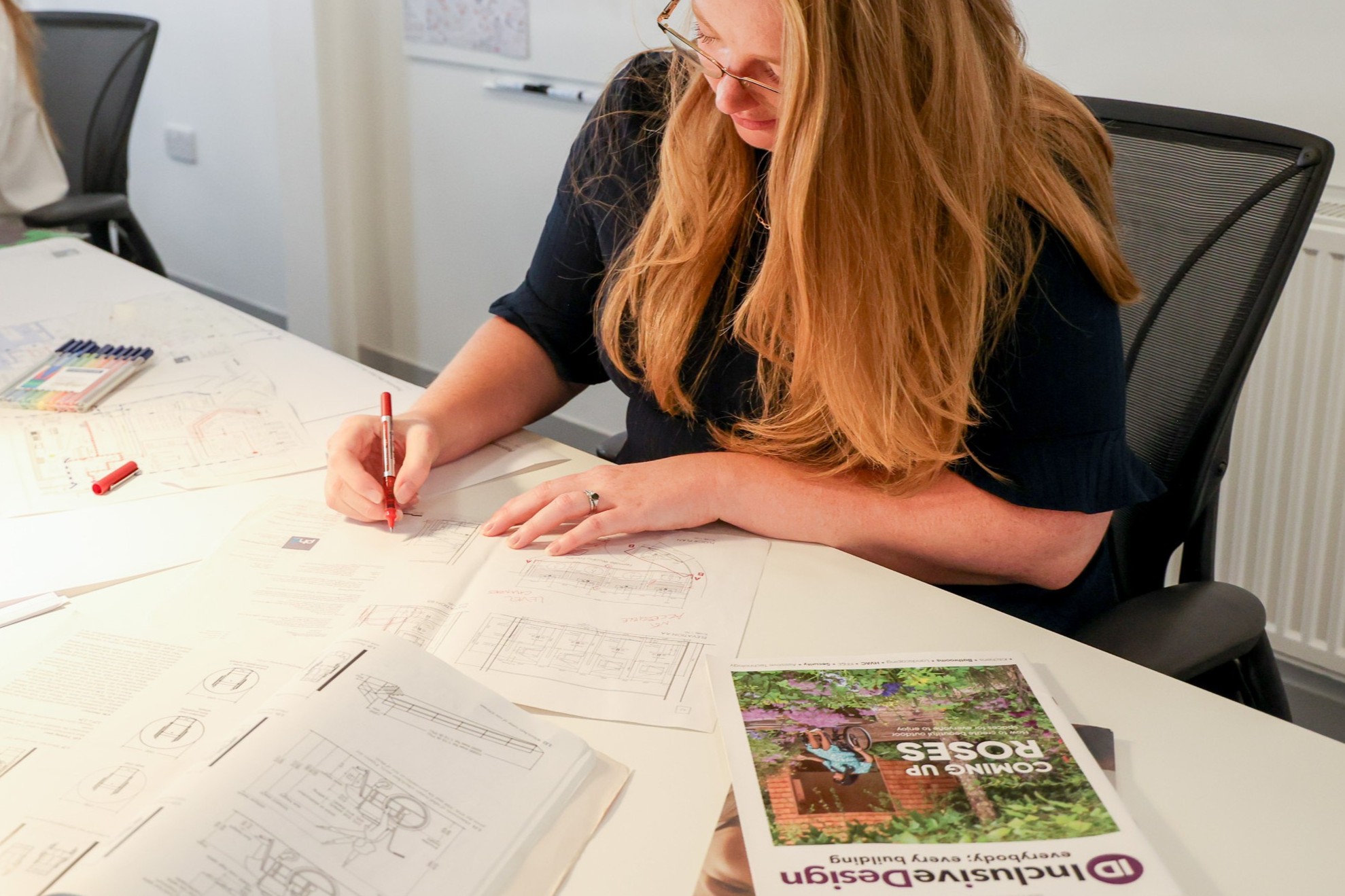
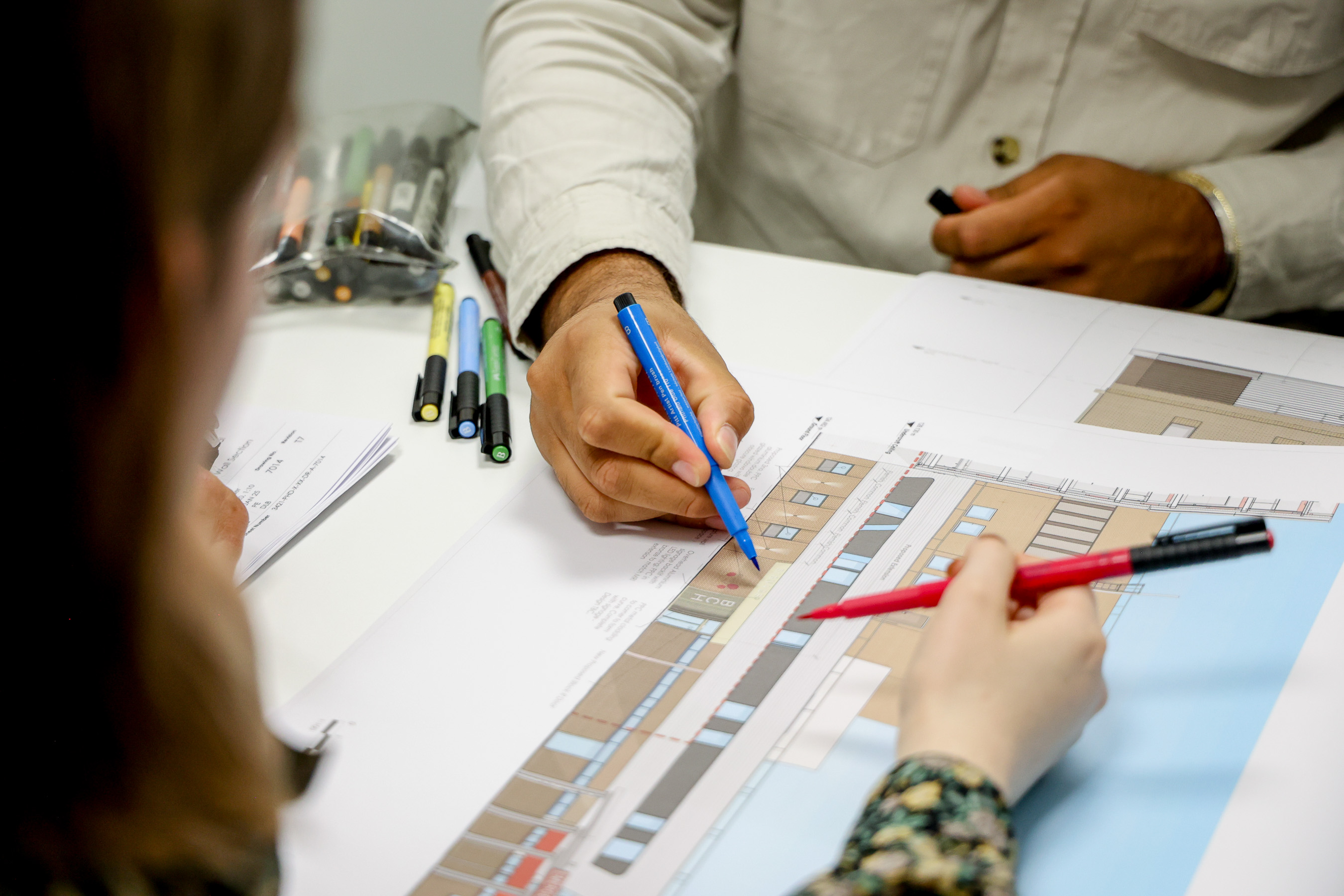
We believe that Inclusive Design is more than just a principle; it's a commitment.
A commitment to creating environments that are not just accessible, but usable by everyone, regardless of ability, age, faith or gender. Our approach is both human-centred and future-focused, ensuring that spaces are not only functional for today's users but adaptable for future generations.
Accessibility is one of the core pillars for creating sustainable, high-quality places and should be integrated from the start to avoid costly modifications later.


We collaborate with the project team to develop inclusive possibilities and solutions while identifying obstacles to accessibility and inclusion. We carry out this work in a variety of fields, such as built environments, public areas, dementia care, and in-depth analyses of residential floor plans.
User consultation is not just a step in our process, it's a key to understanding the true needs and purposes of the project. Our team combines technical expertise with social awareness to create empathetic spaces that work seamlessly for everyone.
We offer comprehensive services throughout the project lifecycle, including:
Building, design and occupancy audits
Pre and post-occupancy usability assessments
Part M, BS 8300, Equality Act compliance reviews
Access statements for planning
Early design input for new builds, refurbishments and masterplans
Accessible placemaking and public realm design
Inclusive fire strategy and evacuation planning
Culture, faith, gender, children, SEND, dementia and neurodiversity-sensitive spaces
Material, finishes and specification selection
Signage and wayfinding reviews
Tactile, Braille, high-contrast, pictogram and multilingual systems
Dementia-friendly spatial cognition analysis
Inclusive design toolkits and accessibility guides
Client-specific design and access standards
Bespoke workshops on inclusive design and legislation
Co-design and participatory design sessions
Inclusion is embedded from concept to completion—not added as an afterthought.
Every project is guided by user insight, with a focus on involving groups often marginalised.
Our team’s expertise in Part M, BS 8300, the Equality Act, and WCAG ensures best practice and compliance throughout.
Inclusive environments promote well-being, enhance usability, and create resilient, future-proof spaces for everyone.
Older buildings naturally reflect the standards of their time. As demand grows to extend the life of existing structures and adapt spaces for contemporary use, our team provides sensitive, practical guidance to integrate inclusive solutions within these constraints.
By planning for inclusivity from the outset, we help you not only meet legal obligations but also respond to the broader needs of diverse communities—reducing the need for costly retrofits and ensuring every project serves all users effectively, now and into the future.